Insights

Real experiences and insights that shape outcomes

img

Digital Transformation – Why Adopt a Build, Operate, Transfer Model

January 31, 2023

What is Digital Transformation?

Digital transformation refers to the use of digital technologies to fundamentally change how an organization operates and delivers value to its customers. It involves the integration of digital technology into all areas of a business. Digital transformation fundamentally changes how the business operates and delivers value to customers. It also refers to the cultural changes taking place within an organization in order to take advantage of digital technologies.

What Technologies are used in Digital Transformation?

Digital transformation often involves the use of several new technologies such as cloud computing, artificial intelligence, and many similar areas. It also involves data analytics to improve efficiency, reduce costs, and create new revenue streams. It may also involve the use of digital technologies to improve customer experiences. Personalized recommendations or self-service options are a few of these experiences.

What are the challenges of a Digital Strategy Leader?

There are several key challenges that digital strategy leaders may face when working on digital transformation projects:

  1. Resistance to Change: Digital transformation often requires significant changes to an organization’s business model, processes, and culture. Some employees may resist these changes, which can be a challenge for digital strategy consultants to overcome.
  2. Complexity: Digital transformation projects can be complex, involving the integration of multiple technologies and the overhaul of many different business processes. This complexity can be difficult for digital strategy consultants to manage.
  3. Limited Resources: Digital transformation projects often require a significant investment of time and resources. If an organization does not have sufficient resources, it may be difficult for digital strategy consultants to successfully complete the project.
  4. Lack of Clear Goals: Without clear goals and objectives, it can be difficult for digital strategy consultants to develop an effective strategy for digital transformation.
  5. Limited in-house Expertise: Many organizations do not have the necessary in-house expertise to fully understand and implement digital transformation projects. This can be a challenge for digital strategy consultants who must rely on external resources to complete the project.

What are the Options to Overcome these Challenges?

There are several strategies that digital strategy consultants can use to overcome the challenges of digital transformation projects:

  1. Communication: Work to effectively communicate the benefits of digital transformation to employees and stakeholders and address any concerns or resistance to change.
  2. Collaboration: Often involve the integration of multiple technologies and the participation of various departments and stakeholders. Digital strategy consultants should work to foster collaboration and build strong working relationships to ensure the success of the project.
  3. Resource Allocation: Work with the organization to allocate sufficient resources, including time, budget, and personnel, to support the digital transformation project.
  4. Goal Setting: Help the organization to clearly define its goals and objectives for the digital transformation project and develop a strategy to achieve those goals.
  5. Expertise: Bring in outside expertise and resources to supplement the organization’s in-house capabilities and ensure the successful completion of the digital transformation project.

What is the Build-Operate-Transfer Model?

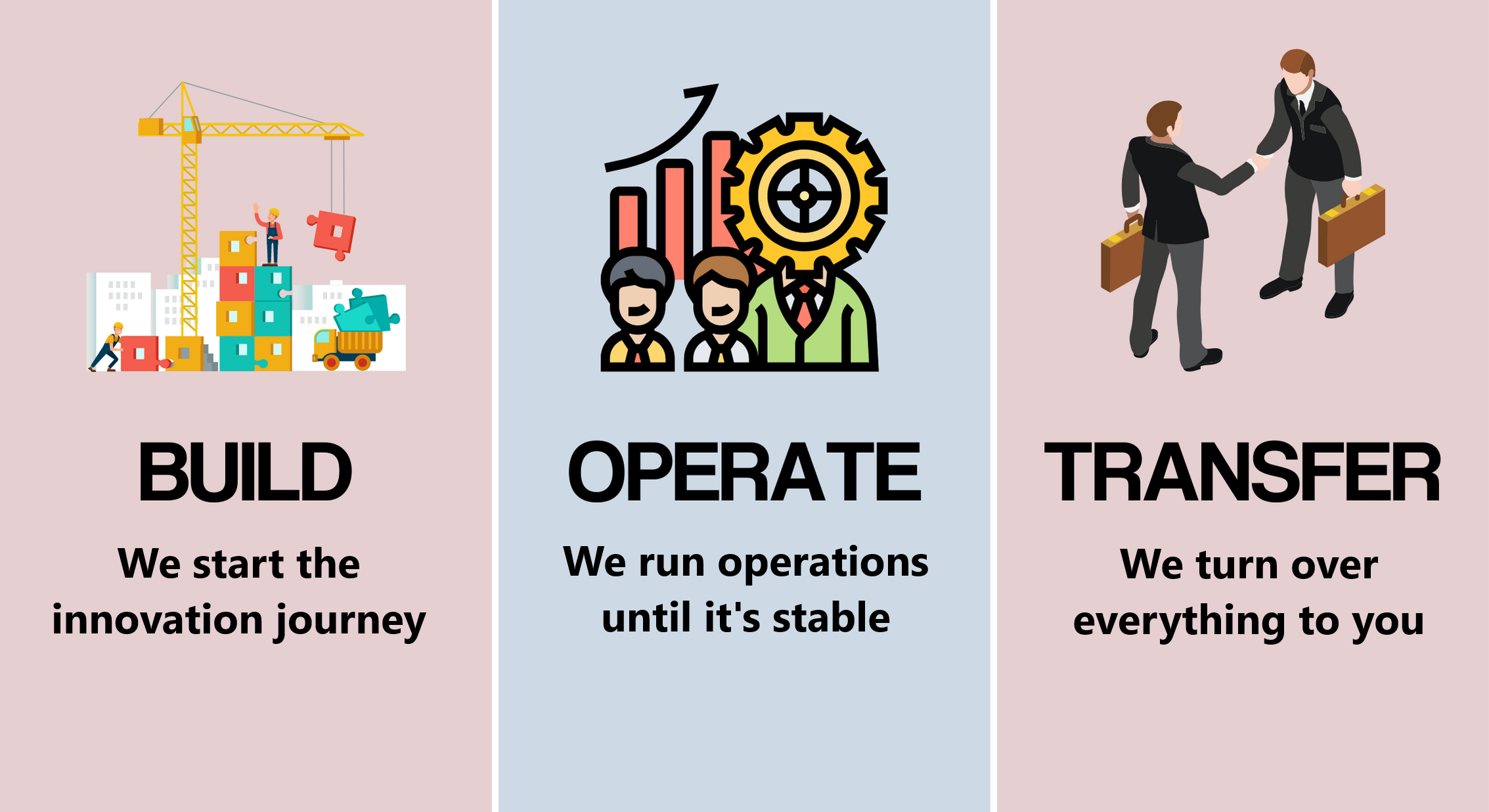
Build-Operate-Transfer (BOT) is a model that is often used in infrastructure projects. A private company designs build and operate a facility (such as a road, bridge, or power plant) for a specified period of time. At completion, the ownership of the facility is transferred back to the government or public entity.

Why should a Business Engaging in a Digital Transformation Exercise Consider a Build-Operate-Transfer Model?

There are several potential reasons why a business might consider using the BOT model for executing a digital transformation program:

  1. Cost savings: By engaging a digital strategy consultant, the development and operation of the digital transformation initiative are easily managed. The organization can avoid the costs associated with hiring and training in-house staff. It also minimizes the costs of acquiring and maintaining the necessary technology and infrastructure.
  2. Access to Expertise: A BOT model allows the organization to tap into the expertise of the third-party provider. They bring specialized knowledge and experience in implementing and managing digital transformation initiatives.
  3. Risk Management: The organization effectively transfers the ownership and responsibility for the digital transformation initiative to the digital strategy consultant. The organization can avoid the risks associated with developing and operating the initiative in-house. These include technical challenges, delays, or cost overruns.
  4. Flexibility: A BOT model allows the organization to customize the digital transformation initiative to its specific needs and requirements, and to adjust the scope and scale of the initiative as needed over time.
  5. Scalability: Partnering for the digital transformation initiative, the organization can scale up or down the initiative as needed. This happens without incurring the costs and risks associated with building and maintaining the necessary infrastructure and technology in-house.

Conclusion

Overall, the BOT model can be a useful option for businesses looking to execute digital transformation programs, particularly when expertise and risk management are key considerations.

Typically, the Build-Operate-Transfer model has become a weapon in the digital strategy armory of a new-age company and is used extensively in the creation of Global Captive Centers, Global Incubation Centers, India Offshoring, and for creating Global Delivery Centers.

Grep Digital has extensively built digital transformation solutions in many industry domains. Connect with us to partner in your adoption of digital transformation and build seamless solutions.

Related Insights

November 30, 2022
How to Manage and Optimize Cloud Spend

Is cloudification a boon or bane? Businesses are moving to the cloud to embrace and adopt new technologies. The existing applications move from on-premises into cloud. Businesses u

Read more
January 12, 2024
Creating Smart Buildings – Key Considerations

Introduction Businesses today are constantly seeking ways to streamline operations, enhance productivity, and create more engaging environments for people, employees and clients a

Read more
January 21, 2023
India Stack and eGovernance

India stack provides the basic infrastructure of identity, payments, and data management. The eGovernance solutions are developed on top of it to create trust in digitally enforced

Read more
October 6, 2023
Conversational bot – Application aware, Interactive and Intelligent

  Introduction   Conversational bot is one of the most exciting applications of NLP is the development of interactive and intelligent bots. These bots have the poten

Read more
September 26, 2023
Leverage Data for Net Zero Goals

Introduction Data Management Solutions play and important role in meeting the net zero targets. In the global quest to combat climate change, green energy utility providers play a

Read more

Start Your Journey Now

    Address

    Technogrep Solutions LLP
    HD-022, WeWork Pavilion,
    62/63 The Pavilion Church Street,
    MG Road, Bangalore,
    India-560001

    ✉ info @ grepdigital.com