Insights
Real experiences and insights that shape outcomes

Today, modern data centers generate massive volumes of telemetry. Sensors continuously capture environmental readings, power metrics, surveillance events, access logs, and IT performance signals. As a result, operational complexity increases with scale.
However, during incidents, operators do not think in charts or dashboards. Instead, they think in spaces, racks, rows, and physical cause-and-effect.
Therefore, a Photo-Twin–driven monitoring approach converts telemetry into a clear visual operating view of the data center. By anchoring live signals to real layouts and physical assets, operators quickly see where an issue occurs, what it affects, and how to respond.
Importantly, visualization does not replace monitoring. Rather, it strengthens operational understanding. Surveillance events, sensor readings, power anomalies, and IT alerts appear as contextual signals, enabling faster detection and clearer diagnosis.

Traditionally, data center monitoring tools rely on lists, graphs, and thresholds. While these views remain accurate, they often fail under pressure. During incidents, operators still ask fundamental questions:
Where is the issue occurring?
Which physical assets are affected?
Is the issue isolated or spreading?
As a result, response time increases while confidence decreases.
A Photo-Twin approach closes this gap by linking telemetry to physical reality. Temperature spikes appear on affected racks. Power anomalies surface next to dependent assets. Meanwhile, security events align with access zones and surveillance coverage.
Consequently, this spatial grounding reduces cognitive load. Operators identify root causes faster, especially in dense, high-availability environments where every second matters.
As data centers evolve, operational complexity increases across multiple dimensions.
Environmental and Infrastructure Risk
Temperature gradients, airflow imbalance, humidity shifts, and liquid-cooling leaks can degrade performance or trigger failures if teams miss early signals.
Operational Silos
Power, cooling, security, and IT systems often operate independently. Consequently, shared situational awareness remains limited.
Limited Physical Context
Legacy monitoring tools detect threshold breaches. However, they rarely show where issues exist in physical space.
High-Performance Workloads
AI and HPC environments demand real-time telemetry. Therefore, teams must understand issues immediately, not analyze them later.
As a result, for system integrators, the challenge has shifted. Success no longer depends on collecting data. Instead, it depends on turning telemetry into clear, actionable, and visually intuitive insight.
In this engagement, Grep Digital demonstrated how a proven smart monitoring platform can support modern data center operations without introducing domain-locked or custom-built systems.
Configuration-Led Platform Approach
Specifically, the engagement focused on configuring a single framework to:
Represent data center layouts and assets visually
Ingest surveillance, sensor, power, and IT telemetry
Apply rule-driven alerting and correlation
Integrate with existing ITSM and DCIM workflows
In practice, the platform served as a visual operating layer. Assets, signals, rules, and actions coexisted in one operational view. Operators could see incidents in context, while automation handled detection, escalation, and resolution.
In addition, Grep Digital delivered the engagement through three core service pillars — Midas, Nexus, and Orchestrate — covering requirements shaping, solution packaging, and delivery orchestration.
🔸 Midas — Aligning Requirements to Visual Operations
During this phase, Midas translated data center requirements into visual and operational constructs rather than introducing new features.
Instead, the team mapped uptime, fault isolation, environmental safety, security visibility, and SLA compliance to existing platform capabilities. Spatial health states, asset-linked alerts, and traceable incident flows expressed these requirements visually.
Therefore, configuration met every requirement while remaining intuitive for operators and consistent with enterprise expectations.
🔸 Nexus — Solution Packaging & Validation
During Nexus, the platform adopted the data center’s physical structure and operational scope. Assets, sensors, surveillance feeds, power systems, and IT telemetry aligned to real layouts using a Photo-Twin hierarchy—from site to rack.
At the same time, rules and correlations applied consistently across all signal types. Incidents surfaced visually and contextually, while integrations preserved existing DCIM and ITSM investments.
As a result, this step confirmed that the solution represented a direct instantiation of the monitoring methodology, not a parallel system.
🔸 Orchestrate — Operationalizing Day-to-Day Workflows
Finally, Orchestrate validated the solution against real operational procedures.
Teams aligned asset registries, rack identifiers, and sensor placements with the visual model. SOP-driven workflows governed response:
acknowledge → diagnose → escalate → resolve → close
Meanwhile, automation created tickets automatically, routed incidents through rule-based logic, and tracked KPIs. Consequently, operators retained familiar processes while gaining faster response and clearer situational awareness.

Clear Visual Operations
As a result, operators gained a spatially grounded view of environmental, power, security, and IT conditions. Visual context reduced ambiguity and improved decision confidence.
Faster Detection and Resolution
Visual correlation, rule-based alerting, and automated ticketing improved MTTD and MTTR. Therefore, teams identified and resolved issues faster.
Unified Monitoring
Facilities, security, and IT teams worked from a single operational view. Consequently, the solution reduced dashboard sprawl without replacing existing systems.
Configuration-Led Delivery
Configuration replaced custom development. As a result, teams deployed faster and demonstrated proof-of-value earlier.
Scalable Operations
Over time, once established, the model replicated easily across sites while preserving workflows, KPIs, and governance.

Visual Context Accelerates Action: Operators respond faster when telemetry aligns with physical layouts and assets.
Unified Signals Reduce Complexity: Correlating environmental, power, security, and IT data strengthens operations.
Configuration Beats Customization: Flexible platforms adapt faster than domain-locked solutions.
Context Improves Automation: Rules and ticketing perform better with asset and location awareness.
Consistency Enables Scale: Standard models and workflows simplify multi-site growth.

As demonstrated, this engagement shows how system integrators can meet diverse data center requirements using a single, configurable monitoring approach. Visual context reduces onboarding effort, while standardized workflows simplify delivery and long-term support.
Most importantly, the model adapts as environments evolve. New sensors, higher rack densities, and additional sites integrate smoothly without changing the core operating framework.
Looking to monitor data centers in your region?
Contact us today !!
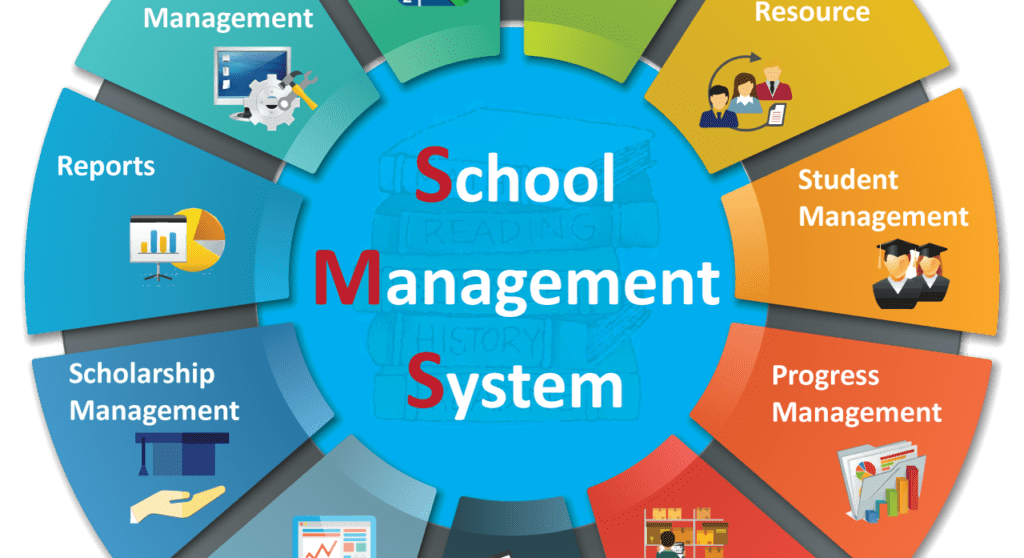
Introduction In today's rapidly evolving educational landscape, technology plays a critical role in increasing administrative efficiency and improving learning outcomes. Enterpris
Read more
A global automotive subsidiary faced the weight of aging mainframe systems — critical to daily operations but difficult to maintain, integrate, or evolve. Over the years, these
Read more
At Grep Digital, we continuously look for ways to adopt modern technologies to solve some earlier problems or upgrade from legacy systems. The contact center is one such area where
Read more
In a renewable-powered, high-tech city under development, emergency services were fragmented — multiple hotlines, siloed fleets, and delayed response times were compromising th
Read more
When a new state law in the U.S. required ride-hailing companies to classify drivers as employees rather than contractors, one major platform needed to act fast. Compliance, payr
Read more Technogrep Solutions LLP
HD-022, WeWork Pavilion,
62/63 The Pavilion Church Street,
MG Road, Bangalore,
India-560001
✉ info @ grepdigital.com
