Insights
Real experiences and insights that shape outcomes

All companies carry legacy systems, generally defined as “information systems that may be based on outdated technologies but are critical to day-to-day operations”. During a digital transformation initiative, such systems and their users need to be handled with care, even while ensuring that the end-goal for the new initiatives are not compromised with.
A pragmatic approach is to sustain the value they bring to business while modernizing it to meet the business agility and fuel the innovation.
Modernizing legacy applications will increase an organization’s agility by enabling it to scale, deploy on the cloud, use emerging technologies, let go of accumulated technology debt, separate concerns and services, and say goodbye to non-responsive UIs, spaghetti code and inflexible architecture.
There are 5 ways to consider when modernizing the legacy applications.
A legacy application is akin to an older home. Before renovating it, you must assess the situation and determine where the issues lie. Does it need a new foundation, new plumbing or just new wiring? Similarly, legacy applications should be assessed to determine if issues lie with the code, technology or architecture, or if they lie elsewhere.
According to Help Net Security, 89% of UK enterprises maintain legacy applications for the valuable data they hold. If you are keeping legacy apps on life support in order to maintain valuable information that is needed for the business, there are options. Consider purchasing a prebuilt SaaS application or content repository and migrating the data to the new platform. While this path may include the need to customize for your data, the ROI of this work should come in the form of IT resources freed up for strategic innovation.
If the application itself delivers everyday business value, a good first question is whether it can run in the cloud. If so, re-hosting might be the best option, since you can move the application to the cloud without changing the code.
You could also consider reinstalling the app in the cloud. This way, you can move it to the cloud while removing unnecessary software and configurations that have accumulated over the years. This way, you could also introduce new best practices like security monitoring.
If the technology cannot run in the cloud, look for a SaaS alternative. When found, take the steps to retire the app. If no SaaS option exists, consider rearchitecting the application, changing enough of the code to move it to the cloud.
To achieve greater digital innovation and operational excellence while decreasing overhead, consider containerization. While this approach is costly, it has the added benefit of allowing you to upgrade components (such as a database) to better take advantage of the cloud. Containerization also provides portability, enabling you to move the application into the cloud without regard for existing dependencies.
Although containerizing a legacy application requires resources that are able to change the application code to take advantage of base platform services such as auto-scaling, it provides valuable repeatability and stability. It allows the app to take advantage of some cloud functionality like immutable infrastructure. Other examples are continuous integration and continuous delivery (CI/CD).
To achieve the greatest benefits and reduce application management as much as possible, consider a server-less approach. Abstracting the application from its functions means that those functions can run anywhere. This gives you the opportunity to leverage advanced platform services that lead to paradigm shifts. Examples include moving your legacy monolith to microservices with technologies like Lambda and DynamoDB. A server-less computing model may be challenging for many legacy applications. But those that can be re-engineered in this way maximize their cost efficiency and achieve the best cloud ROI.
Modernizing your legacy and monolithic applications may seem overwhelming and can add to the cost of “technical debt.” It is possible to achieve a high ROI and explore digital transformation initiatives that differentiate your digital experience from competition. Managing technology change is critical to restructuring the monolithic application and seamlessly transitioning between different infrastructure and platform providers.
Grep Digital helps businesses to adopt the best of technology practices to maximize their return on investments. Connect with us to partner in your digital journey.
Credits: Articles & Whitepapers from Forbes, SiriusCom, AltexSoft

Introduction In today's dynamic business landscape, understanding customer needs is paramount for success. The Customer Needs Discovery Workshop serves as a pivotal tool in gainin
Read more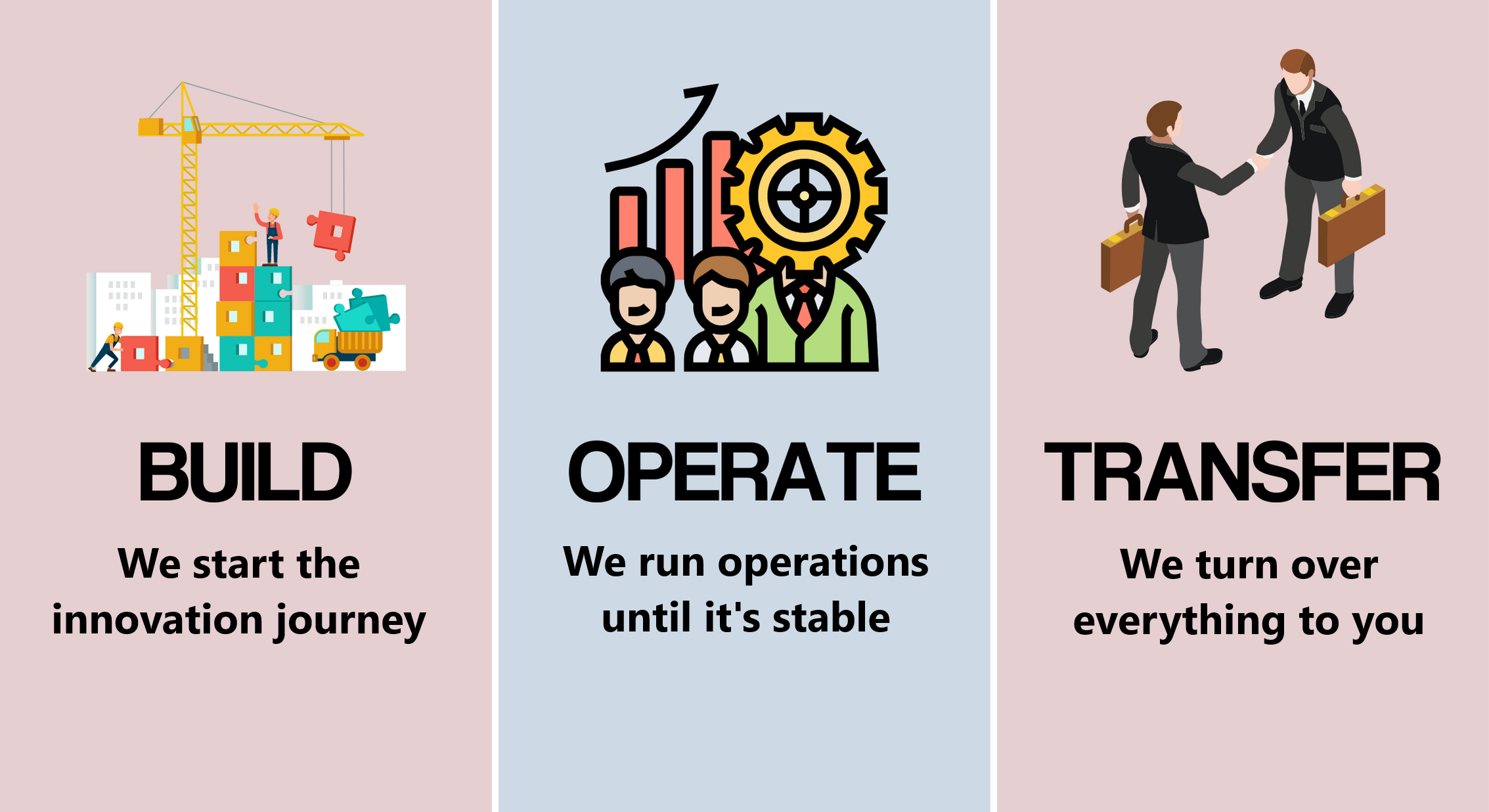
Introduction In the software industry, product incubation is an essential aspect of innovation and growth. The Build-Operate-Transfer model (BOT) is a cost-effective and flexible
Read more
Introduction Businesses today are constantly seeking ways to streamline operations, enhance productivity, and create more engaging environments for people, employees and clients a
Read more
Is cloudification a boon or bane? Businesses are moving to the cloud to embrace and adopt new technologies. The existing applications move from on-premises into cloud. Businesses u
Read more
Bringing a product idea to reality can be a challenging process, but with the right approach, also incredibly rewarding. As a CxO of an organization, you have a unique perspective
Read more Technogrep Solutions LLP
HD-022, WeWork Pavilion,
62/63 The Pavilion Church Street,
MG Road, Bangalore,
India-560001
✉ info @ grepdigital.com
