Insights
Real experiences and insights that shape outcomes

Secure Software Development Lifecycle (SDLC) is a systematic approach to developing software that emphasizes security from the beginning and throughout the entire development process. It integrates security practices into every phase of the SDLC, from initial design to deployment, to ensure that software applications are robust, resilient, and resistant to security threats.
In this article we will focus on the SDLC process and methodology and how it is applied at the various stages of the product life cycle.

This phase of the Secure Software Development Lifecycle (SDLC) is a crucial step in developing secure software. This phase involves understanding the functional requirements of the software application as well as identifying potential security risks and defining security objectives. This includes understanding the intended use of the application, identifying potential security risks, and defining security objectives.
The first step in requirements gathering is to identify the stakeholders involved in the software development process. This includes individuals or groups who have a vested interest in the software, such as end-users, business owners, regulatory bodies, and security teams. Understanding their perspectives and requirements is essential to ensure that the software meets their needs and aligns with security goals.
The development team needs to have a clear understanding of how the software will be used. This involves gathering information about the target audience, their roles and responsibilities, and the specific tasks they will perform using the software. By understanding the context in which the software will be used, the team can identify potential security risks and tailor security controls accordingly.
Functional requirements describe what the software should do and how it should behave. The development team collaborates with stakeholders to document these requirements, which can include features, functionalities, workflows, and user interfaces. It is crucial to ensure that security-related functionalities, such as authentication, access control, data encryption, and auditing, are properly incorporated into the functional requirements.
In parallel with gathering functional requirements, the team conducts a thorough analysis to identify potential security risks. This involves conducting threat modeling exercises, considering common attack vectors, and examining the software’s potential exposure to security vulnerabilities. The goal is to identify potential security weaknesses and prioritize them based on their impact and likelihood of exploitation.
Based on the identified security risks, the team defines security objectives for the software application. These objectives outline the desired security posture and serve as a foundation for designing and implementing appropriate security controls. Security objectives can include confidentiality, integrity, availability, accountability, and non-repudiation. They should be specific, measurable, achievable, relevant, and time-bound (SMART).
Depending on the industry and regulatory environment, the software may need to comply with specific standards, regulations, or frameworks. During this phase, the team identifies and documents any compliance requirements that must be met. This can include industry-specific regulations like HIPAA or GDPR, security frameworks like ISO 27001, or internal organizational policies.
Finally, all the gathered information, including functional requirements, identified security risks, security objectives, and compliance requirements, is documented in a requirements document. This document serves as a reference for the development team throughout the SDLC. It ensures that the entire team, including developers, testers, and security professionals, have a common understanding of the software requirements and security expectations.
This phase of the Secure Software Development Lifecycle (SDLC) is a critical step in identifying potential threats and vulnerabilities in the software application. The goal is to understand how attackers might exploit weaknesses in the system and prioritize security measures accordingly. This helps in designing appropriate security controls and countermeasures.
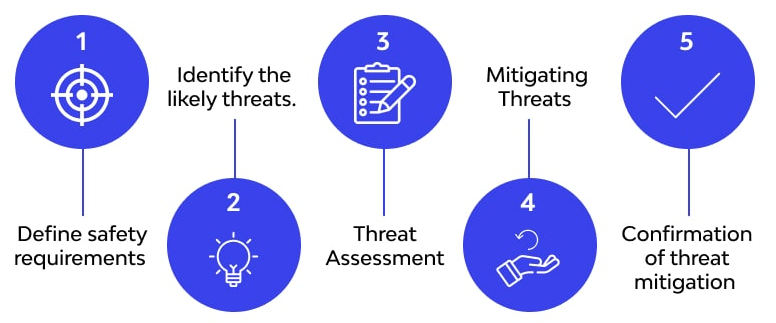
The first step in threat modelling is to define the scope of the exercise. This involves identifying the boundaries of the system or application that will be analysed. It’s important to clearly define what is included in the scope and what is out of scope to ensure that the exercise remains focused and manageable.
Next, the development team creates an overview of the application. This includes understanding the architecture, components, data flow, and dependencies of the system. It’s crucial to have a clear understanding of how the application is structured and how different components interact with each other.
In this step, potential threat sources are identified. These can include external attackers, internal users with malicious intent, unintentional insiders, or even natural disasters. By identifying the threat sources, the team can anticipate the motivations and capabilities of potential attackers and assess the risks associated with each source.
Threat vectors are the paths or methods that threat sources can use to exploit vulnerabilities in the system. The team identifies and maps out the various ways an attacker could gain unauthorized access, manipulate data, or disrupt the system. This can include network-based attacks, social engineering, insecure coding practices, or insecure configurations.
At this stage, the team analyzes the application from a security perspective to identify potential vulnerabilities. This can be done by examining the architecture, reviewing code, analyzing configuration settings, and studying any relevant documentation. Common vulnerabilities such as injection attacks, authentication flaws, authorization issues, and insecure data storage should be considered.
For each identified vulnerability, the team assesses the potential impact and likelihood of exploitation. Impact refers to the potential harm or damage that can occur if the vulnerability is successfully exploited. Likelihood refers to the probability that an attacker will be able to exploit the vulnerability. By assessing these factors, the team can prioritize their efforts and focus on the most critical threats.
Based on the identified threats, vectors, and vulnerabilities, the team determines and documents the necessary security controls and countermeasures. These can include implementing access controls, input validation, encryption, secure coding practices, security monitoring, and incident response procedures. The goal is to design and implement appropriate safeguards to mitigate the identified risks.
Finally, the findings of the threat modelling exercise, including identified threats, vulnerabilities, and proposed security controls, are documented and communicated to relevant stakeholders. This documentation serves as a reference for the development team and other stakeholders throughout the SDLC. It helps in ensuring that everyone involved has a common understanding of the identified risks and the corresponding mitigation measures.
This phase of the Secure Software Development Lifecycle (SDLC) is a crucial step in incorporating security controls and mechanisms into the software architecture. This phase focuses on designing the software application in a way that addresses security considerations and mitigates potential risks. This includes considering security principles such as least privilege, defense-in-depth, and separation of concerns. The design should address authentication, authorization, data encryption, input validation, secure communication protocols, and other relevant security considerations.
During the design phase, the development team integrates security principles into the software architecture. These principles include:


The design should address robust authentication and authorization mechanisms. This involves designing secure methods for user authentication, such as strong password policies, multi-factor authentication, or biometric authentication. The design should also define proper authorization mechanisms, ensuring that users have appropriate access rights and permissions based on their roles and responsibilities.
Data encryption is crucial to protect sensitive information. The design should incorporate encryption techniques to protect data at rest and in transit. This can include using strong encryption algorithms and implementing secure key management practices to ensure the confidentiality and integrity of the data.
Input validation is essential to prevent common security vulnerabilities such as injection attacks (e.g., SQL injection, cross-site scripting). The design should incorporate proper input validation techniques, including input sanitization, parameterized queries, and output encoding. This helps to ensure that user-supplied data is properly validated and sanitized before being processed.
The design should consider secure communication protocols to protect data during transmission. This includes using protocols such as HTTPS for web applications, SSL/TLS for network communications, and secure APIs. Secure communication protocols help in preventing eavesdropping, tampering, and data interception.
The design should address proper error handling and logging mechanisms. Error messages should be designed to provide minimal information to potential attackers while being useful for debugging purposes. Logging should be implemented to record security events and anomalies, allowing for monitoring and investigation of potential security incidents.
The design should address secure storage practices, such as protecting sensitive data in databases or files. Proper access controls should be implemented to restrict access to sensitive data or critical system resources. This includes role-based access controls, data encryption, and secure configuration of storage systems.
The design should consider the inclusion of security testing considerations. This involves designing the system in a way that facilitates security testing activities such as vulnerability scanning, penetration testing, and code reviews. It may include building in hooks for security testing tools, creating test scenarios to validate security controls, and incorporating security-specific requirements into the test plan.
If the software application relies on third-party integrations or dependencies (e.g., libraries, frameworks, APIs), the design should include evaluating the security of these components. It is important to ensure that these integrations adhere to secure coding practices, undergo regular security updates, and do not introduce vulnerabilities into the system.
The Implementation phase of the Secure Software Development Lifecycle (SDLC) is where the development team translates the design specifications into actual code. This phase focuses on following secure coding practices to mitigate common vulnerabilities and ensure that the software is developed with security in mind. The goal is to identify and fix security issues before deployment.

The development team should adhere to secure coding guidelines specific to the programming language or framework being used. These guidelines provide best practices for writing secure code and help mitigate common vulnerabilities. They may cover topics such as input validation, output encoding, secure error handling, secure memory management, and proper use of cryptographic functions.
Input Validation and Output Encoding
During implementation, it is crucial to implement proper input validation techniques to prevent injection attacks, such as SQL injection or cross-site scripting (XSS). User-supplied data should be validated, sanitized, and properly encoded before being processed or displayed. This helps to prevent malicious code execution or unintended data manipulation.
Secure Authentication and Authorization
Implement secure authentication mechanisms according to the design specifications. This includes securely storing and handling user credentials, implementing password policies (such as strong password requirements and password hashing), and incorporating secure session management. Authorization mechanisms should also be implemented to ensure that users have appropriate access rights and permissions.
Secure Memory Management
Proper memory management is essential to prevent vulnerabilities like buffer overflows or memory leaks. The development team should use secure coding practices, such as bounds checking and safe memory allocation and deallocation, to minimize the risk of memory-related vulnerabilities.
Secure Communication
Implement secure communication protocols and encryption techniques to protect data during transmission. Use secure network protocols (e.g., HTTPS, SSL/TLS) for web applications and ensure that sensitive data is properly encrypted. Implement secure APIs and enforce secure communication practices when integrating with external systems.
Avoid Hard-coded Secrets
Avoid hard-coding sensitive information such as passwords, API keys, or cryptographic keys directly into the source code. Instead, utilize secure storage mechanisms such as configuration files, secure key management systems, or environment variables to store and retrieve sensitive information. This helps prevent accidental exposure of sensitive data.
Ensure that third-party libraries, frameworks, and components used in the software are kept up to date with the latest security patches. Regularly check for security advisories and updates from the respective vendors and promptly apply the necessary patches to address any known vulnerabilities.
Implement proper error handling mechanisms to avoid revealing sensitive information or system details to potential attackers. Error messages should be generic and not disclose any specific information about the system or internal workings. Additionally, consider logging errors and exceptions appropriately for security monitoring and debugging purposes.
Regular code reviews and testing are essential during the implementation phase. Conduct peer code reviews to identify security vulnerabilities, coding errors, or potential weaknesses in the implementation. Additionally, perform security testing activities such as vulnerability scanning, penetration testing, and security-focused code analysis tools to identify any potential security issues that may have been missed.
Utilize well-established and reputable libraries or frameworks that have built-in security features. These frameworks often provide security controls and functions that help mitigate common vulnerabilities, such as input validation, output encoding, and secure session management. However, it is still important to review and configure these libraries properly to ensure their secure usage.
Ensure that the software is deployed with secure configurations. This involves properly configuring the software components, servers, and infrastructure to adhere to security best practices. Default configurations should be changed to avoid common vulnerabilities, and unnecessary features or services should be disabled or removed to reduce the attack surface.
Promote code reusability by developing secure coding libraries or modules that can be reused across different projects. These reusable components should follow secure coding practices and have undergone thorough security testing. This approach not only saves development time but also ensures consistent security implementation.
Maintain detailed documentation of the security-related aspects of the implementation. This includes documenting security controls, configurations, and any security-related decisions made during the implementation phase. This documentation serves as a reference for developers, testers, and future maintainers, helping them understand and maintain the security measures implemented.
Ensure that the development environment itself is secure. Developers should use secure development tools, such as IDEs with built-in security features or plugins that assist in identifying potential security issues. Secure coding practices should be encouraged, and developers should be trained on secure coding techniques and secure development methodologies.
Integrate security practices throughout the entire SDLC. Security should not be an isolated phase but rather a continuous effort. Consider incorporating security activities such as code reviews, security testing, and threat modelling at regular intervals during the development process. This ensures that security is an ongoing consideration and helps identify and address potential vulnerabilities early on.
Invest in regular training and awareness programs for developers to enhance their understanding of secure coding practices, emerging threats, and security trends. Keeping developers up to date with the latest security knowledge and providing them with resources and training can greatly enhance the overall security posture of the software being developed.
The “Deployment” phase of the Secure Software Development Lifecycle (SDLC) is the process of preparing the software for release and making it available to users or customers. This phase involves several steps to ensure the secure deployment of the software. This involves securely configuring the underlying infrastructure, hardening the operating system and network configurations, and ensuring secure deployment practices. Secure deployment mechanisms, such as code signing and secure distribution channels, are employed to prevent unauthorized modifications and ensure the integrity of the software.
Before deploying the software, the underlying infrastructure, including servers, databases, and network configurations, should be securely configured. This involves implementing security best practices such as disabling unnecessary services, properly configuring firewalls and access controls, enabling encryption where appropriate, and applying security patches and updates.
The operating system on which the software will be deployed should undergo hardening to minimize potential vulnerabilities. This includes disabling unnecessary services and features, enabling appropriate security settings, configuring access controls and user privileges, and implementing secure network configurations. Hardening guidelines specific to the operating system should be followed.
During deployment, it is important to follow secure deployment practices. This includes ensuring that the deployment process is carried out in a controlled and secure manner, with proper access controls and permissions. Deployment scripts or procedures should be reviewed for security considerations and validated to prevent unauthorized modifications or tampering.
To ensure the integrity and authenticity of the software, code signing can be employed. Code signing involves digitally signing the software with a certificate issued by a trusted certificate authority. This provides a mechanism for users to verify that the software has not been tampered with and originates from a trusted source.
When distributing the software, it is important to use secure distribution channels. This includes utilizing secure protocols, such as HTTPS or secure file transfer protocols (SFTP), for transmitting the software to users. Distributing software through reputable and secure channels reduces the risk of unauthorized modifications or tampering during transit.
Ensure that the configuration of the deployed software is securely managed. This includes maintaining proper configuration documentation, version control, and change management processes. Proper configuration management helps in maintaining the security posture of the deployed software and facilitates efficient and secure updates or patches when required.
Implement logging and monitoring mechanisms to capture and analyze security events and anomalies in the deployed software. This helps in detecting potential security incidents and allows for timely response and investigation. Logs should be securely stored and protected against unauthorized access.
Establish a process for managing updates and patches to address any vulnerabilities or issues identified after deployment. Regularly monitor for security updates and patches provided by software vendors and promptly apply them to the deployed software. Maintain a reliable process for distributing and applying updates to ensure the security of the deployed software is maintained.
When retiring or decommissioning the software, ensure that proper procedures are followed to securely remove it from the production environment. This includes removing all sensitive data, securely wiping storage media, revoking access privileges, and properly documenting the decommissioning process.
After deployment, the software requires ongoing maintenance and patching to address newly discovered security vulnerabilities. The development team should promptly respond to security incidents, release patches or updates, and provide mechanisms for users to apply those patches easily. Regular vulnerability assessments and security monitoring are crucial during this phase.
The “Maintenance and Patching” phase of the Secure Software Development Lifecycle (SDLC) is a critical stage that occurs after the software has been deployed. This phase focuses on maintaining the security of the software over its lifespan by addressing newly discovered vulnerabilities and promptly responding to security incidents. Here’s a detailed explanation of the maintenance and patching process:
Establish a process for promptly responding to security incidents. This involves having a dedicated incident response team or point of contact to handle and coordinate the response to security events. The team should be prepared to investigate, assess the impact, mitigate the incident, and apply necessary patches or updates to address any vulnerabilities exploited during the incident.
Regularly conduct vulnerability assessments to identify new vulnerabilities or weaknesses in the software. This can include conducting periodic security scans, penetration testing, code reviews, or employing automated vulnerability assessment tools. The assessments help identify potential security gaps and allow the development team to prioritize and address vulnerabilities
Develop a robust patch management process to address newly discovered vulnerabilities. This involves monitoring for security updates or patches released by software vendors, promptly evaluating their relevance and impact on the deployed software, and applying the patches in a timely manner. Establish clear procedures for testing and deploying patches to minimize disruptions to the software’s functionality.
Provide a secure and reliable method for distributing patches or updates to the users or customers. This may include using secure channels such as encrypted updates over HTTPS or implementing an automatic update mechanism within the software itself. Ensure that users are notified about the availability of patches or updates and provide clear instructions on how to apply them.
Continuously monitor the software for security events and anomalies. Implement a security monitoring system that collects and analyzes logs, detects potential security incidents, and provides alerts for suspicious activities. Monitoring helps identify and respond to security breaches, and aids in the ongoing assessment of the software’s security posture.
Establish mechanisms for users or customers to report security incidents or vulnerabilities they may discover. Provide clear instructions on how to report incidents and maintain open lines of communication to receive and respond to such reports. Promptly acknowledge and address reported vulnerabilities to ensure timely resolution and maintain user trust.
Regularly educate and train the development team and relevant stakeholders on emerging security threats, best practices, and secure coding techniques. Keeping the team updated with the latest security knowledge helps in maintaining a proactive approach to security and ensures the implementation of robust security measures during the maintenance and patching phase.
Maintain proper configuration management during the maintenance phase. This includes documenting and managing changes made to the software’s configuration, ensuring that configurations adhere to security best practices, and maintaining an up-to-date inventory of software components and dependencies.
Perform security testing during the maintenance phase to validate the effectiveness of patches and updates. This includes retesting the software to ensure that the applied patches have not introduced new vulnerabilities or caused regressions. Regression testing helps ensure that the functionality and security of the software are not compromised by the applied patches.
Develop an end-of-life plan for the software to ensure a smooth transition when it reaches the end of its lifecycle. This includes defining processes for securely retiring or decommissioning the software, providing guidelines for data migration or archiving, and communicating the end-of-life timeline to users or customers. Consider providing recommendations for alternative software or upgrades to ensure ongoing security.
Maintain continuous monitoring and adapt security measures to address emerging threats and vulnerabilities. Stay informed about new security risks, vulnerabilities, and industry best practices. Update security controls, configurations, and policies as necessary to address the evolving threat landscape.
Educate users or customers about their role in maintaining the security of the software. Provide guidance on best practices, such as keeping their systems up to date with the latest patches, using strong passwords, and being vigilant about phishing and social engineering attacks. User awareness and responsible usage play a vital role in overall software security.
Establish channels for users or customers to provide feedback and report security vulnerabilities or bugs they encounter. Encourage open communication and make it easy for users to report potential security issues. Actively address reported vulnerabilities, fix bugs, and provide timely updates to users to maintain their confidence in the software’s security.
Maintain up-to-date security documentation that captures changes, patches, and security-related information during the maintenance phase. This documentation serves as a valuable resource for future maintenance and helps ensure knowledge transfer between development teams. Document any lessons learned from security incidents or patches to improve future software development and maintenance processes.
The “Secure Retirement” phase of the Secure Software Development Lifecycle (SDLC) is the process of securely decommissioning and retiring a software application that has reached the end of its lifecycle. This phase focuses on ensuring that the application is removed from production environments, sensitive data is properly handled, and residual information or functionality that could be exploited is eliminated. Here’s a detailed explanation of the secure retirement process:

Identify and securely remove any sensitive data associated with the retired software. This includes personally identifiable information (PII), confidential data, or any other sensitive information that may have been stored or processed by the application. Proper data removal techniques, such as secure data deletion or data obfuscation, should be employed to ensure that the data cannot be accessed or recovered.
Maintain an inventory of the retired software, including its components, dependencies, and associated documentation. This inventory serves as a reference for future auditing or compliance purposes. Document the retirement process, including the steps taken to securely retire the software, data removal procedures, and any relevant configuration details.
Communicate the retirement of the software to relevant stakeholders, including users, customers, and internal teams. Provide clear instructions and guidance on the transition process, including recommendations for alternative software or upgrades, data migration or archiving, and any necessary support or assistance during the transition period
Ensure that the retired software is completely removed from production environments, including servers, databases, and associated infrastructure. Disable or uninstall any related services or components to prevent unintended access or usage. Review and update any documentation or configuration management systems to reflect the removal of the software.
If the retirement includes decommissioning hardware that was used to host or support the software, ensure proper disposal or repurposing of the hardware. Follow secure disposal practices, such as data wiping or physical destruction, to prevent any potential data leakage or unauthorized access. Consider environmental considerations when disposing of hardware in accordance with local regulations.
Review and retain security documentation related to the retired software. This includes documentation of security controls, configuration details, and any relevant security incident reports or lessons learned. Retaining this documentation can serve as a reference for future projects, audits, or compliance requirements.
If required by contractual obligations or regulatory requirements, provide limited end-of-life support for a defined period. This may include addressing critical security issues, providing access to archived data, or assisting with transition efforts. Clearly communicate the extent and limitations of end-of-life support to stakeholders.
Validate the successful retirement of the software by conducting post-retirement assessments. This may involve verifying the removal of sensitive data, ensuring the complete removal of the software from production environments, and validating that residual information or functionality does not exist.
Review any contractual or legal obligations related to the retirement of the software. Ensure that you comply with any specific requirements, such as data retention periods, data transfer agreements, or intellectual property considerations. Consult legal or compliance experts to ensure adherence to relevant regulations and contractual obligations.
Facilitate knowledge transfer from the retired software to relevant teams or stakeholders. This includes documenting any unique features, configurations, or customizations that may be relevant for future projects. Transfer knowledge and documentation to appropriate teams responsible for managing similar software or successor systems.
Conduct a risk assessment to identify any potential security risks associated with the disposal or retirement process. Address any identified risks, such as data leakage during hardware disposal, by implementing appropriate controls and mitigation measures. Follow best practices for hardware disposal and adhere to local regulations for data destruction and electronic waste management.
Maintain incident response and forensic capabilities even after the retirement of the software. Preserve relevant incident response documentation and forensic artifacts in case future investigations or legal proceedings require access to this information. Retain incident response plans and contact information for the retired software to support any necessary future incident response efforts.
Maintain open communication channels with users and customers throughout the retirement process. Provide clear information on the reasons for retirement, the timeline, and any impacts on their operations. Offer support and assistance during the transition period and ensure that users have alternative options or recommendations for similar software solutions.
Maintain a level of continuous monitoring for any residual risks associated with the retired software. This includes monitoring for any potential security vulnerabilities or threats that may still exist in the retired software’s codebase or components. Stay informed about security updates or advisories related to any dependencies or technologies used by the retired software.
Ensure the retention of relevant retirement documentation, including security assessments, risk assessments, communication records, and incident response documentation. Retaining these records supports accountability, compliance, and future reference, and can assist in audit or compliance processes.
The Secure Software Development Lifecycle (SDLC) encompasses a series of processes and methodologies designed to prioritize security throughout the software development journey. By integrating security practices from the initial requirements gathering and analysis phase to the deployment, maintenance, and secure retirement phases, organizations can develop software applications that are resilient against potential security threats. The SDLC emphasizes the importance of threat modelling, secure design principles, implementation of secure coding practices, deployment best practices, and ongoing maintenance and patching. By following these practices, organizations can create software that not only meets functional requirements but also incorporates robust security controls and countermeasures. Ultimately, a comprehensive and well-executed SDLC helps to minimize vulnerabilities, protect sensitive data, and instill confidence in the security of software applications.
Contact us to discuss your requirements on secure software development practices, and we can assist with our on-demand teams

Ethereum vs Solana vs Polygon Consensus It is one mandatory procedure for all the decentralized blockchain platforms. It is what helps to reach an agreement on the present
Read more
Introduction In the world of natural language processing (NLP), two technologies that are currently making headlines are LaMDA and ChatGPT. Both of these technologies are enable c
Read more
Sundar Pichai introduced Vertex AI to the world during the Google I/O 2021 conference last year, placing it against managed AI platforms such as Amazon Web Services (AWS) and Azure
Read more
Introduction Conversational bot is one of the most exciting applications of NLP is the development of interactive and intelligent bots. These bots have the poten
Read more
The metaverse has recently gained a lot of attention on a global scale. Everyone now wants to know what it actually is and how it will work. The metaverse domain promises to provid
Read more Technogrep Solutions LLP
HD-022, WeWork Pavilion,
62/63 The Pavilion Church Street,
MG Road, Bangalore,
India-560001
✉ info @ grepdigital.com
