Insights
Real experiences and insights that shape outcomes

India stack provides the basic infrastructure of identity, payments, and data management. The eGovernance solutions are developed on top of it to create trust in digitally enforced commercial contracts. The government’s initiative to enable digital currency further increases the speed of transactions and settlements. Here we discuss a few of these initiatives and how they are creating opportunities for startups to innovate and participate in the economy.
BADAL is a distributed ledger technology (DLT) platform developed as part of the India Stack. It seeks to accelerate trusted commerce in India. It provides a secure, transparent, and efficient way to store and manage data and transactions. Digitizing commercial contracts enforcement remains a challenge while a solution is already available for faster and interoperable payments,

The contracting parties have different versions of the truth. The data systems don’t inter-operate thereby reducing trust and creating friction for economic growth. The connection between the goods and services ledger with the money ledger can enforce the binding promise to execute programmatically. The use of technology to solve this trust problem is a unique opportunity for India.
Multiple participating parties maintain a decentralized distributed ledger that offers privacy-preserving trustful commerce. It is proposed as an interoperable fabric underlying a future programmable economy across large and small businesses to create a high-trust economy. It uses cryptographic techniques to ensure the integrity and security of the data and transactions stored on the ledger. BADAL allows for the creation of tamper-evident records of transactions. It tracks and verifies the authenticity of various types of data, such as financial transactions, legal documents, and more.
Distributed Ledger technology can help in two ways – first by being able to verify past performance before one party strikes a deal with another, and second, by being able to enforce a contract in most situations as the performance unfolds in the future. Thus, building trust in the past as well as the future.
Fabric based on such principles helps to create and grow a large number of applications to record economic activity. It helps to reconcile with past data and inject a level of trust by creating immutable records. These consist of a trusted data record and programmable contracts.
One of the key benefits of BADAL is its ability to enable real-time, peer-to-peer transactions without the need for intermediaries. This can help to reduce transaction costs and increase the efficiency of various processes. The design of BADAL is scalable and suitable for use in a variety of applications and sectors.
Overall, BADAL is an important part of India Stack’s efforts to build a digital infrastructure that supports the delivery of efficient and effective digital services to citizens and businesses in India. It will play a key role in enabling the digitization of various sectors and driving digital transformation in the country.
In 2022, the NPCI announced the launch of a new digital payment mode on UPI called e-RUPI, which functions as an electronic voucher system that can be utilized by any mobile phone user in India. The goal of e-RUPI is to provide an improvement over existing prepaid payment modes. The intent is to enable a single-use digital payment solution (represented by an SMS string or QR code). It is specific to a person and purpose for use cases such as donations, gift vouchers, or even Covid vaccine subsidies.
Reserve Bank of India broadly defines CBDC (Digital Rupee (e₹)) as the legal tender issued by a central bank in a digital form. CBDC is similar to sovereign paper currency but takes a different form. It will exchange at par with the existing currency, and an alternate medium of payment. CBDC is a legal tender and a safe store of value. Key aspects of the Digital Rupee are

The India Stack has the potential to significantly improve the delivery of various public and private services in India. It provides a secure and reliable platform to build digital services to access by a large number of citizens and businesses.
CBDC, being a sovereign currency, holds unique advantages of central bank money, viz. trust, safety, liquidity, settlement finality, and integrity. The key motivations for exploring the issuance of CBDC in India, among others, include,
The use of the offline feature in CBDC would also be beneficial in remote locations and offer availability and resilience benefits when electrical power or a mobile network is not available. CBDCs will provide the public with the benefits of virtual currencies while ensuring consumer protection by avoiding the damaging social and economic consequences of private virtual currencies/ Crypto Currencies.
CBDC can be classified into two broad types, viz. general purpose or Retail (CBDC-R) and Wholesale (CBDC-W). Retail CBDC (e₹-R) will be available for use by all, viz., private sector, nonfinancial consumers, and businesses. The use of wholesale CBDC (e₹-W) is for restricted access to select financial institutions. It allows for the settlement of interbank transfers and the corresponding wholesale transactions. The Retail CBDC is an electronic version of cash primarily for retail transactions.
The structure of CBDC is based on ‘token’ or ‘account’. A token issued under CBDC is akin to a bearer instrument like a banknote. The holder of this token is the owner of this instrument. In contrast, an account-based system would require the maintenance of records of balances and transactions of all holders of the CBDC and indicate the ownership of the monetary balances. Considering the features offered by both the forms of CBDCs, a token-based CBDC is viewed as a preferred mode for CBDC-R as it would be closer to physical cash, while an account-based CBDC may be considered for CBDC-W. In 2022, India has started the pilot of both wholesale and retail versions of the digital rupee with a limited number of banks in a few cities.
CBDC complements, rather than replaces, current forms of money. It provides an additional payment avenue to users, not replacing the existing payment systems. Supported by state-of-the-art payment systems of India that are affordable, accessible, convenient, efficient, safe, and secure, the Digital Rupee (e₹) system will further bolster India’s digital economy, make the monetary and payment systems more efficient and contribute to furthering financial inclusion. The digitally enforced trusted commerce and Digital Rupee open up new opportunities for new-age players to participate in growth.
Grep Digital has used distributed ledger technologies extensively to build eGovernance solutions. Connect with us to partner in your adoption of the India Stack and build seamless solutions.
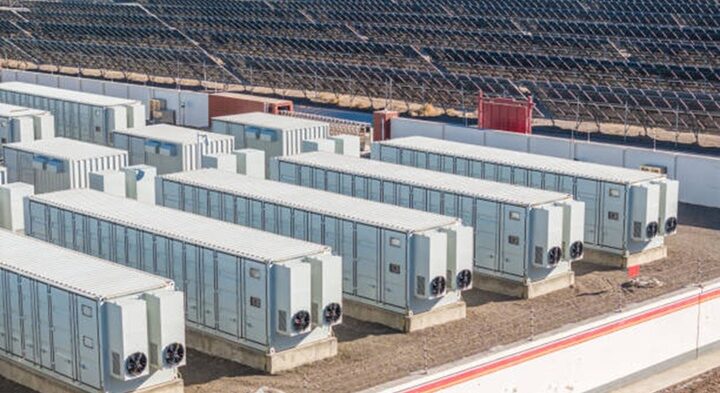
Modern solar energy environments continue to grow in complexity. Solar generation, grid supply, battery storage, and generator backup now operate as a single interconnected system.
Read more
Introduction Conversational bot is one of the most exciting applications of NLP is the development of interactive and intelligent bots. These bots have the poten
Read more
Introduction Businesses today are constantly seeking ways to streamline operations, enhance productivity, and create more engaging environments for people, employees and clients a
Read more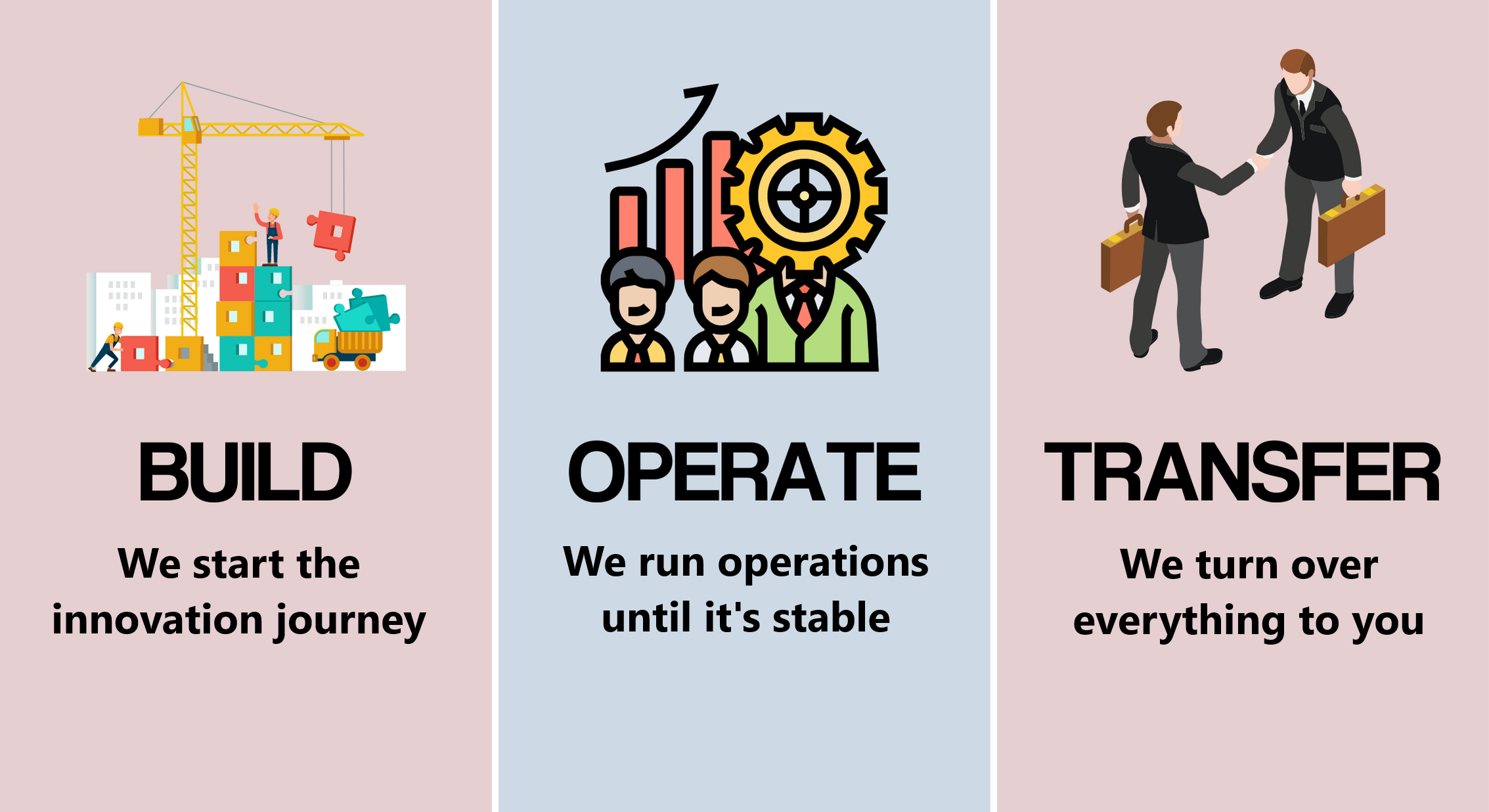
Introduction In the software industry, product incubation is an essential aspect of innovation and growth. The Build-Operate-Transfer model (BOT) is a cost-effective and flexible
Read more
Introduction Data Management Solutions play and important role in meeting the net zero targets. In the global quest to combat climate change, green energy utility providers play a
Read more Technogrep Solutions LLP
HD-022, WeWork Pavilion,
62/63 The Pavilion Church Street,
MG Road, Bangalore,
India-560001
✉ info @ grepdigital.com
